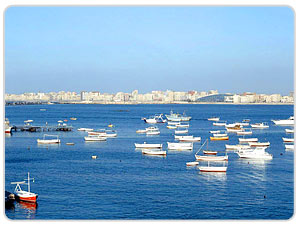
The second largest city in Egypt, Alexandria, known as "The Pearl of the Mediterranean", has an atmosphere that is more Mediterranean than Middle Eastern; its ambience and cultural heritage distance it from the rest of the country although it is actually only 225 km. from Cairo.
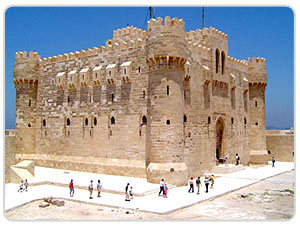
Founded by Alexander the Great in 331 BC, Alexandria became the capital of Graeco-Roman Egypt, its status as a beacon of culture symbolized by Pharos, the legendary lighthouse that was one of the Seven Wonders of the World. The setting for the stormy relationship between Cleopatra and Mark Antony, Alexandria was also the center of learning in the ancient world. But ancient Alexandria declined, and when Napoleon landed, he found a sparsely populated fishing village.
From the 19th century Alexandria took a new role, as a focus for Egypt's commercial and maritime expansion. This Alexandria has been immortalized by writers such as E-M- Forster and Cavafy. Generations of immigrants from Greece, Italy and the Levant settled here and made the city synonymous with commerce, cosmopolitanism and bohemian culture.
Location
Alexandria is actually only 225 km. from Cairo. Alexandria is easily reached by plane, train or bus.
Weather
Alexandria has a Mediterranean climate, with warm humid summers and mild rainy winters. The daytime can be humid in summer, with summer temperatures averaging 31°C (88°F), but evenings are usually cooler and breezy, especially by the Corniche. Winters can get cold, with daytime highs down sometimes to 12°C (53°F), with occasional rain and sometimes hail. Humidity is high throughout the year. The best time to visit Alexandria is in spring (March-June) and autumn (September-November), since it's at its busiest in summer, when Egyptians flock down to escape the searing heat of Cairo.
Alexandria Library
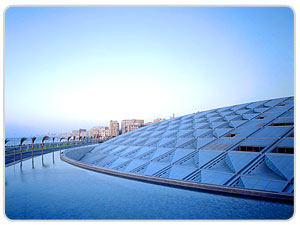
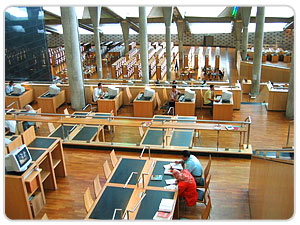
The Royal Library of Alexandria in Alexandria, Egypt, was once the largest library in the world. It is generally thought to have been founded at the beginning of the 3rd century BC, during the reign of Ptolemy II of Egypt. It was likely created after his father had built what would become the first part of the Library complex, the temple of the Muses. The Bibliotheca Alexandrina was inaugurated in 2003 near the site of the old Library.
Pompey's Pillar and Serapeum
One of the best-known ancient monuments in Alexandria is Pompey’s Pillar. Mistakenly named in the Middle Ages, it is still standing on Alexandria’s ancient acropolis that was originally part of a temple colonnade. It is almost 100 feet tall, including its pedestal, with a red granite shaft.
Under the acropolis are the subterranean remains of the Serapeum, with carved wall niches that are thought to have provided overflow storage space for the ancient library. There are pieces of statuary on display, including two sphinxes at the site.
Catacombs (Kom El-Shoqafa)
Just southwest of the pillar are the catacombs (Kom al-Shoqafa), which comprise three-levels cut into the existing rock, accessible by a large spiral staircase. There are several chambers decorated with sculpted pillars, statues, and other Romano-Egyptian religious symbols, burial niches, and sarcophagi. There is also a Roman-style banquet room that held memorial meals hosted by relatives of the deceased.
Roman Theatre (Kom El-Dikka)
The unique Roman Theatre is located downtown at Kom al-Dikkah (near Misr train station). Discovered by accident in the early 1960s, it has 12 semi-circular marble tiers in good condition. The Roman Theatre site has undergone some restoration, includes placement of pillars and a display of some statues from undersea explorations. The site is also home to some mosaics in the Villa of the Birds. It is not possible to access the entire area as there is more excavation under way.
The Royal Jewellery Museum
Reopened after a five year renovation programme on April 10th. Housed in the former palace of Princess Fatima AlZahra, it contains paintings and statues as well as the Royal Jewelry of the Mohamed Ali Dynasty.
|